
We Didn’t Build a Practice Management Wrapper

There was a faster way to build ModernPM.
We could have started with Microsoft Dynamics, Oracle NetSuite, Workday, or another large enterprise platform. We could have configured it, added an accounting-industry interface, filled in a few gaps, and called it practice management software.
That would have been easier in the beginning.
But the shortcut comes with permanent consequences.
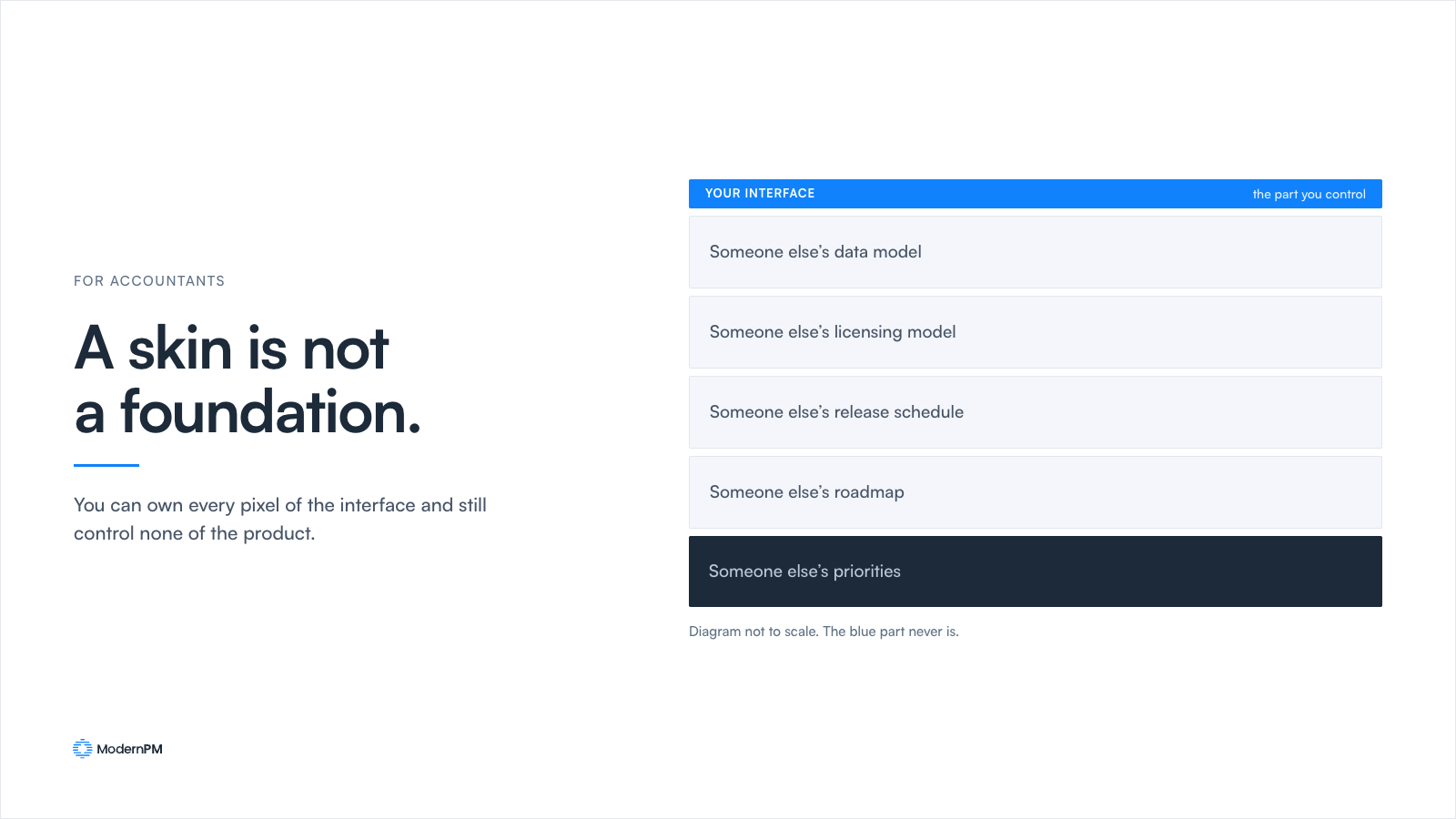
When you build on someone else’s platform, you inherit their architecture, licensing model, limitations, release schedule, and priorities.
You may own the interface, but you do not fully control the product because you do not control the foundation.
Every new feature must fit within someone else’s framework. Every unusual requirement becomes another configuration project. Every major platform change has the potential to become your problem—even though you had no control over it.
You are not simply building software. You are building software while paying a toll and working within boundaries established by a company that is not focused on CPA firms.
We chose the harder path.
ModernPM was built from the ground up based on what accounting firms asked us to build.
We did not start with a general-purpose ERP and ask how we could configure it for CPA firms. We started with CPA firms and asked what the right system should be.
That affects everything: the data structure, workflows, billing processes, time tracking, due-date management, reporting, integrations, and user experience.
It also means that when firms need the product to change, we can write software. We do not have to wait for another platform’s roadmap or hire an army of configurators to work around the problem.
Purpose-built software takes longer to create. It requires more developers, more discipline, and a deeper understanding of the profession.
But practice management is too important to be a skin placed over someone else’s system.
CPA firms deserve software built around the way they operate—not a general-purpose platform configured to look close enough.
