
When dependencies live in someone's head, they're not dependencies. They're risks.

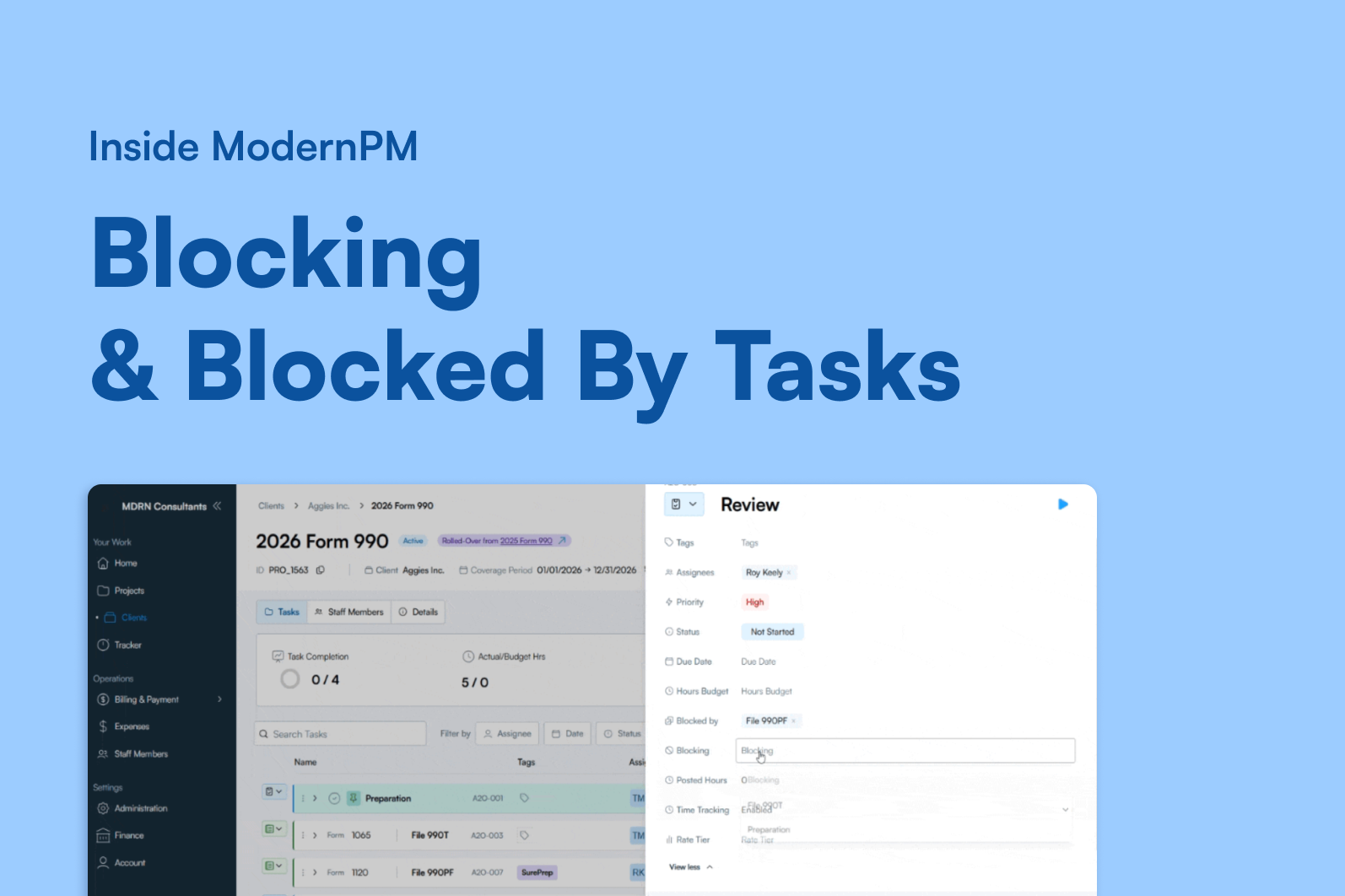
Here's a scenario that plays out in every CPA firm, every single week. A preparer finishes a return. They mark it complete. They move on. Two days later, the reviewer opens it, finds an issue, and sends it back. Meanwhile, the extension that was supposed to go out after the review? Nobody filed it, because the person responsible didn't know the review wasn't done yet.
The dependency was clear in theory. In practice, it lived in someone's head. This is the problem blocking and blocked-by relationships solve in ModernPM.
How It Works
Mark a task as blocking another and the downstream task literally cannot be completed until the upstream one is done. Not "shouldn't be" — can't be. The system enforces it.
Wire these dependencies directly into your project templates so every engagement starts with the sequencing already defined. Or set them on individual projects when something non-standard comes up.
Cross-Project and Cross-Client
The real power is cross-project and cross-client dependencies. If a deliverable for Client A is holding up work for Client B — maybe the same partner needs to review both, or a state filing depends on a federal return for a different entity — that dependency is visible and tracked. Not rattling around in someone's memory, not buried in a task comment, not discovered three days too late.
The Bottom Line
Dependencies aren't a project management concept imported from software engineering. They're the actual structure of CPA work. ModernPM makes that structure visible and enforceable — instead of hoping everyone remembers.
